








![[Bonus] Emma Millstein – Trails into Reverie Trails of Cold Steel 1-8 Figure Kotobukiya 4](https://arcanecollect.com/wp-content/uploads/2025/09/bonus-emma-millstein-trails-into-reverie-trails-of-cold-steel-1-8-figure-kotobukiya-4-242x250.jpeg)
![[Bonus] Emma Millstein – Trails into Reverie Trails of Cold Steel 1-8 Figure Kotobukiya 8](https://arcanecollect.com/wp-content/uploads/2025/09/bonus-emma-millstein-trails-into-reverie-trails-of-cold-steel-1-8-figure-kotobukiya-8-242x250.jpeg)






Author Unknown. (n.d.). Revamped by this site; the views expressed do not necessarily reflect those of this site. For removal requests, please contact us.
1. Strength and Courage
If someone were to ask:
"What is the most captivating aspect of Saint Seiya?"
Many would likely respond:
"The battles!"
Indeed, in Saint Seiya, nothing stirs the soul and ignites passion more than the grand and mesmerizing combat scenes. Upon first encountering the series, techniques like Seiya's Pegasus Meteor Fist, Hyōga's Diamond Dust, Shiryū's Rozan Rising Dragon, Shun's Nebula Chain, and Ikki's Phoenix Wings Rise surely left you in awe.
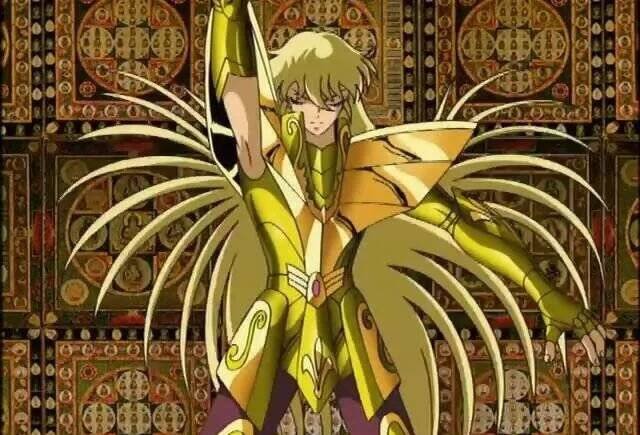
Virgo Shaka Casting Wheel of Heavenly Law (Tenbu Hōrin 天舞寶輪)
Subsequently, the emergence of the Gold Saints, guardians of the Twelve Zodiac Temples bathed in perpetual sunlight, further dimmed the brilliance of the stars. Techniques such as Shaka's Wheel of Heavenly Law, Saga and Kanon's Galaxian Explosion,, Mu's Starlight Extinction, Aiolia's Lightning Plasma, Camus's Aurora Execution, Aldebaran's Great Horn, Shura's Excalibur, Milo's Scarlet Needle, Aphrodite's Piranhan Rose, Deathmask's Praesepe Underworld Waves, and the rare displays of Dohko's Rozan Hundred Dragons and Shion's Stardust Revolution have been topics of enthusiastic discussion.
After witnessing these splendid and exhilarating techniques and battles, a question naturally arises:
"Who is the strongest among the Saints?"
This question has been a subject of intense debate, often leading to what fans call a "thousand-day war" of discussions. The primary reason for these endless debates lies in certain seemingly inconsistent and contradictory descriptions in the original Saint Seiya manga, leading some to jest: "Saint Seiya is a collection of plot holes." Indeed, to err is human; Masami Kurumada, during his writing process, inevitably introduced some oversights, resulting in inconsistencies. However, by viewing Saint Seiya from a different perspective, one might find that these so-called "plot holes" are not as numerous as they seem.
Before delving into the strengths and weaknesses of the Saints, let's introduce a formula that involves concepts we're familiar with but might not fully understand:
Combat Power = Strength × Will to Fight (Equation 1)
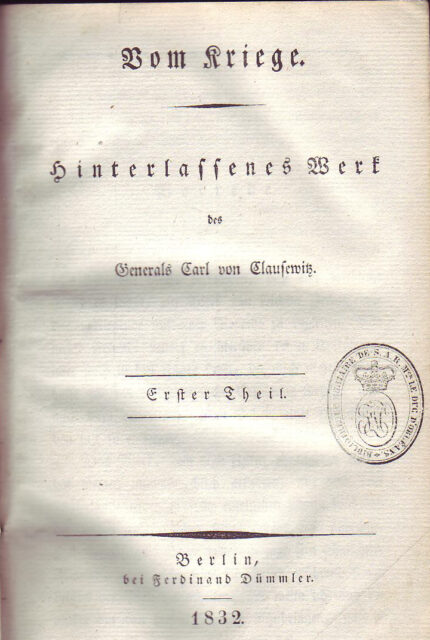
Title page of the original German edition Vom Kriege (On War), published in 1832
This is a crucial formula proposed by Carl von Clausewitz in his military masterpiece On War. The three concepts involved here implicitly pertain to "armies." Combat power refers to an army's capability in warfare - the ability to strike the enemy and secure victory in actual combat. Strength denotes the army's physical capabilities, such as types of troops, numbers, equipment, training, physical fitness, combat skills, etc. The will to fight encompasses the army's mental fortitude, including courage, determination, decisiveness, bravery, resilience (mental endurance), and so forth.
From this formula, we see that combat power is directly related to victory or defeat. In battles, the side with superior combat power is more likely to win. While strength is related to combat power, it isn't the sole determinant of the outcome.
This formula applies to most military engagements but can also be extended to other scenarios. For instance, in the 2002 FIFA World Cup match between Spain and South Korea, this formula offers an explanation. In terms of strength, Spain surpassed South Korea. However, regarding combat power on that day, the situation was different. Playing on home turf, the South Korean team had immense support from local fans. Facing a crucial match against a world-class team, their morale was exceptionally high.
Conversely, Spain underestimated South Korea before the match, expecting an easy win without anticipating a tough battle. When met with South Korea's tenacious resistance, Spain found themselves at a mental disadvantage. This illustrates how South Korea's will to fight overshadowed Spain's, not to mention the controversial refereeing decisions in that match severely undermined Spain's will to fight.
When evaluating the strengths of the Saints, we can adapt the above concepts: Combat power refers to an individual's capability in battle - the ability to strike the enemy and secure victory in actual combat. Strength denotes an individual's physical attributes, such as power, physique, agility, or aspects like attack, defense, speed, stamina, destructive power, etc. The will to fight encompasses an individual's mental fortitude, including courage, determination, decisiveness, bravery, resilience, and so forth.
Cosmo to Combat Power
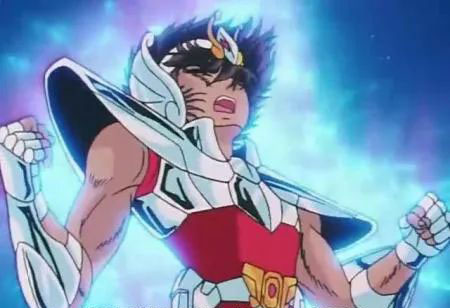
"Burning it! My cosmo!"
Additionally, in Saint Seiya, there's the concept of "Cosmo." It appears to belong to the spiritual realm but directly influences physical abilities. Should it be classified under "strength" or "will to fight"? Considering the distinction between physical and mental aspects, we might categorize relatively stable and less fluctuating Cosmos - like those of most Gold Saints - under "strength," while more volatile and fluctuating Cosmos - such as the explosive Cosmo of Bronze Saints - fall under "will to fight."
It's important to note that when a theory involves mental strength, it often encounters significant challenges. This is because mental strength tends to be volatile and unpredictable, making it difficult to define and quantify. We still believe that, by default, the combatants' mental strengths (will to fight) are relatively equal, while their physical strengths may differ significantly. Therefore, combat power is primarily determined by physical strength. In this article, unless otherwise specified, references to "strength" pertain to physical strength.
Additionally, in other works, such as certain martial arts novels and Romance of the Three Kingdoms, similar evaluations of strength are common (for instance, the martial prowess rankings in Romance of the Three Kingdoms). However, these assessments rarely, if ever, consider the concept of will to fight (mental strength). The reason for introducing it here is due to the unique aspects of Saint Seiya, such as the concepts of Cosmo, the Nth sense, and the frequent occurrences of underestimation of opponents and lack of fighting spirit. Although addressing mental strength may present challenges, it seems necessary for a comprehensive explanation.
Furthermore, in On War, Clausewitz provides a definition of "victory" that encompasses three factors:
- The enemy's physical losses exceed ours.
- The enemy's mental losses surpass ours.
- The enemy abandons their objectives and openly acknowledges this.
If these three points cannot be accurately assessed, in many cases, only one side's cessation of combat (whether voluntary or involuntary) can serve as definitive proof of the other's victory.
In Saint Seiya, defining victory primarily based on the first factor seems reasonable, namely:
- The relative physical losses of the enemy exceed ours.
This is mentioned here for context and is not utilized in the subsequent discussion.
With this groundwork laid, let's delve into the fascinating world of Saint Seiya.
2. Shaka As The Standard
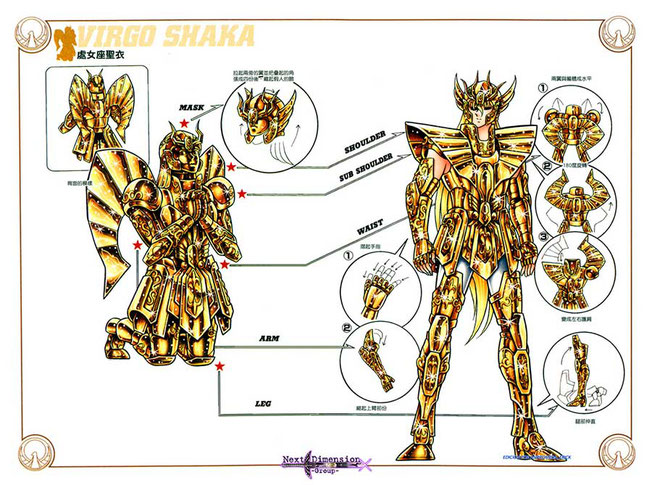
Virgo Cloth from the Saint Seiya Official Art Book
There are numerous works related to Saint Seiya, including the original manga, the anime arcs such as the Galactic Wars, Sanctuary, Asgard, Poseidon, Heaven Chapter, and Hades: Twelve Temples, as well as countless fan creations. When evaluating the strengths and weaknesses of the Saints, which works should serve as the foundation? While this may seem straightforward, opinions vary. However, using Masami Kurumada's original manga as the sole basis for evaluation should be acceptable to most readers.
To avoid contradictions present in different adaptations, this analysis relies exclusively on the original Saint Seiya manga.
It's also essential to emphasize that this evaluation prioritizes actual combat feats within the manga. Descriptions like "closest to God," "most valiant," "god-like," or "even feared by gods" serve only as supplementary references and are considered only in the absence of concrete battle evidence.
The protagonists of Saint Seiya are, of course, the five Bronze Saints led by Seiya. However, among the dazzling constellation of Saints, the most radiant are arguably the dozen or so unique and brilliant Gold Saints. Compared to the Bronze Saints, whose combat power fluctuates - sometimes easily defeated, other times performing earth-shattering feats - the Gold Saints' combat power remains relatively stable. Therefore, when assessing the strengths within Saint Seiya, it's appropriate to begin with the Gold Saints.
In this analysis, we employ a logarithmic scale to represent the relative strengths of Saints.
By taking the base-2 logarithm of a Saint's absolute strength value and multiplying it by 10, we derive the strength value used herein.
For example, if a Saint's absolute strength is 1024, their strength value in this context would be:
log₂(1024) × 10 = 100
Similarly, if a Saint's absolute strength is 512, it would be represented as 90.
This indicates that an increase of 10 points in strength value corresponds to a doubling of absolute strength, while a decrease of 10 points signifies a halving. A 5-point difference equates to a 1.414-fold change in absolute strength. Applying this to Clausewitz's formula:
(Absolute) Combat Power = (Absolute) Strength × (Absolute) Will to Fight (Equation 1)
By similarly taking the base-2 logarithm and multiplying by 10, the formula transforms into:
Combat Power = Strength + Will to Fight (Equation 2)
Assuming a default absolute will to fight value of 1, the default will to fight in Equation 2 is 0.
Henceforth, any references to combat power, strength, or will to fight pertain to these adjusted values. Clausewitz's formula also refers to the adjusted Equation 2.
Remember: an increase of 10 in combat power (or strength, or will to fight) signifies a doubling of its absolute value, while a decrease of 10 implies a reduction to half.
By setting a specific Saint's strength as a benchmark (e.g., assigning a strength of 100), we can compare and determine the strengths of other Saints relative to this standard.
But who is suitable as this benchmark? The ideal candidate should meet the following criteria:
- Their strength exhibits minimal fluctuation; generally, Saints with higher strength have more stable power levels.
- They have engaged in combat with multiple other Saints, facilitating the assessment of others' strengths.
The first criterion excludes four of the five Bronze Saints, leaving only Ikki. Considering the second criterion, our focus naturally shifts to the Twelve Gold Saints.
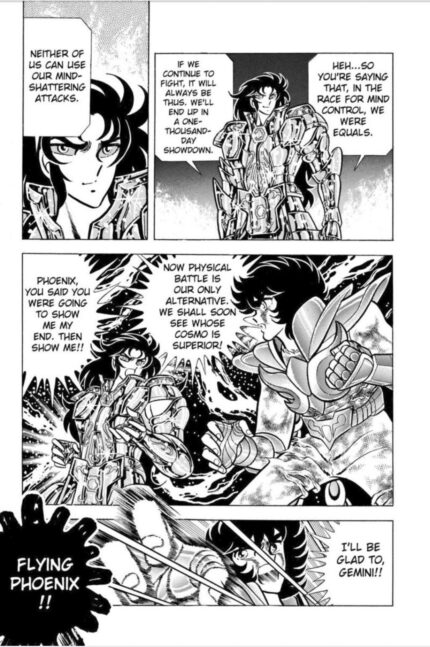
Saga vs Ikki at the end of the Pope's Arc. Source: mangadex.org
Among the Twelve Gold Saints and Ikki, those with numerous combat engagements against stable opponents include:
- Saga: Opponents - Shion (former Pope), Aiolos, Aiolia (twice), Ikki, Kanon, Shaka, Milo.
- Shaka: Opponents - Ikki (twice), Aiolia, Saga, Camus, Shura.
- Ikki: Opponents - Shaka (twice), Saga, Kanon.
- Kanon: Opponents - Ikki, Saga, Rhadamanthys.
- Mu: Opponents - Aphrodite, Deathmask, Rhadamanthys.
- Aiolia: Opponents - Aiolos (?), Shaka, Saga (twice), Rhadamanthys.
Among these, Saga's battles often concluded swiftly, sometimes before his opponents could retaliate; moreover, Saga occasionally underwent transformations. Ikki experienced a growth in strength over time (evident from his two battles with Shaka). Therefore, it seems logical to use Shaka as the standard for evaluating strength.
-
 Saint Seiya Cloth Myth EX Virgo Shaka 20th Revival Figure
$229.00Original price was: $229.00.$219.00Current price is: $219.00.

Assigning Shaka a strength value of 100.
We can analyze the impact of Cloths on a Saint's power.
It's evident that Cloths enhance a Saint's abilities, with Gold Cloths providing a significant boost. For instance, after donning the Sagittarius Gold Cloth, Seiya could evade Aiolia's light-speed punches and even counterattack effectively. Similarly, without his Gold Cloth, Deathmask was vulnerable to Shiryū's attacks. When Seiya, Shiryū, and Hyōga wore Gold Cloths, they posed a considerable threat to Poseidon. Additionally, Kanon, while wearing the Gemini Gold Cloth, could withstand Rhadamanthys's "Greatest Caution" attack, but suffered severe injuries without it.
To quantify this enhancement, it's reasonable to estimate that a standard Gold Cloth doubles a Saint's absolute strength, corresponding to a 10-point increase in strength value. For Saints with lower base strength, this boost might be even more pronounced.
This estimation aids in assessing the true strength of combatants when their Cloths differ.
Therefore, if Shaka's strength value is 100 while wearing his Gold Cloth, his base strength would be 90.
3. Shaka and Saga
Another prominent figure in Saint Seiya is Gemini Saga, whose numerous battles provide valuable insights into assessing other Saints' strengths.
A particularly notable encounter is the battle in the Twin Sala Garden (双沙羅の園, Sōsara no Sono) at Virgo Temple, where Shaka faced three Gold Saints - Saga, Camus, and Shura - simultaneously. Utilizing his ultimate technique, Tenbu Hōrin ("Wheel of Heavenly Law" or "Dharma of Heavenly Law"), Shaka effectively restrained all three until they resorted to the forbidden move, Athena Exclamation, to break free.
-
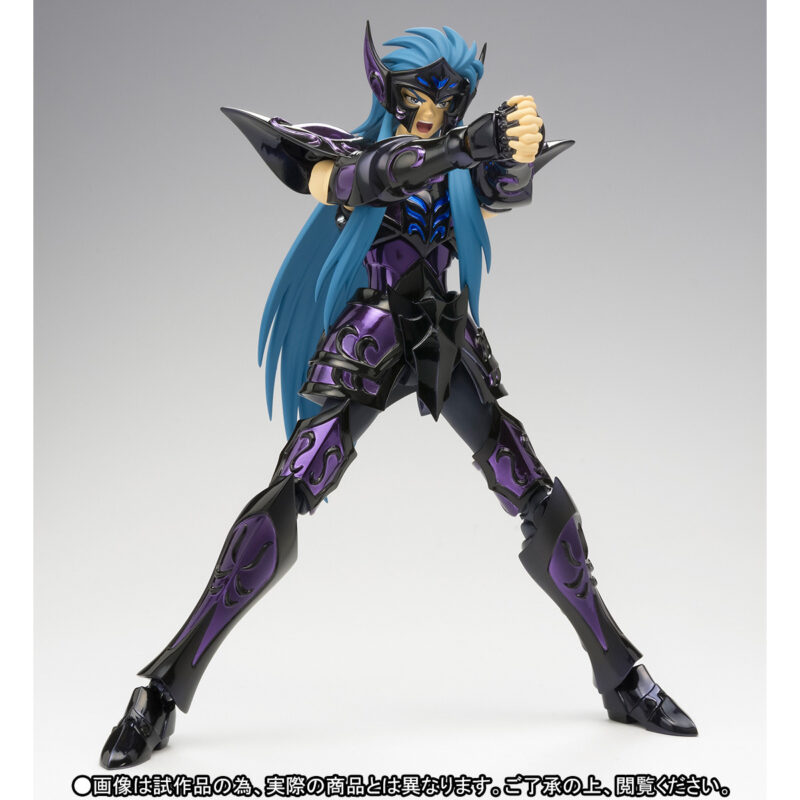
 Saint Seiya Myth Cloth EX Aquarius Camus Surplice 20th Revival Ver. Figure
$159.99 – $169.99Price range: $159.99 through $169.99
Saint Seiya Myth Cloth EX Aquarius Camus Surplice 20th Revival Ver. Figure
$159.99 – $169.99Price range: $159.99 through $169.99
This battle strongly suggests that Shaka's combat power surpasses that of Saga. However, several factors might weaken this assertion:
- Inferior Surplices: Saga and his companions wore Hades' Surplices, which are generally considered inferior to Gold Cloths in terms of enhancing a Saint's abilities.
Supporting evidence includes:
- Gold Cloths significantly boost a Saint's power, whereas Surplices do not demonstrate such enhancement.
- Gold Cloths maintain integrity under immense pressure, such as attacks from Athena Exclamation, while Surplices show noticeable damage under similar conditions.
- Gold Cloths have a storied reputation and have withstood numerous battles, unlike Surplices.
- If Surplices are deemed inferior to those worn by the Three Judges of the Underworld, evidence suggests that even the Judges' Surplices are not on par with Gold Cloths.
- Gold Cloths significantly boost a Saint's power, whereas Surplices do not demonstrate such enhancement.
- Diminished Fighting Spirit: Saga and his allies may have lacked the will to fight, affecting their performance, while Shaka's determination remained unwavering.
Supporting evidence includes: - Aries Mu observed tears in the hearts of Saga and his companions.
- During the battle with Shaka, Saga and Camus did not employ their most potent techniques.
- The trio needed to align their thoughts before executing Athena Exclamation.
- Shaka was resolute, prepared to fight to the death.
- Aries Mu observed tears in the hearts of Saga and his companions.
Other considerations, such as Shaka benefiting from a home-field advantage, support from Athena's Cosmo, the cumulative effect of Tenbu Hōrin, and the possibility of the battle being staged, also weaken the notion that Shaka's strength surpasses Saga's.
Nonetheless, the Garden of the Twin Sala Trees battle strongly supports the idea that Shaka's strength exceeds Saga's, even when accounting for these mitigating factors. Therefore, it's reasonable to assign Saga a strength value of 99.
But is Saga really weaker than Shaka?
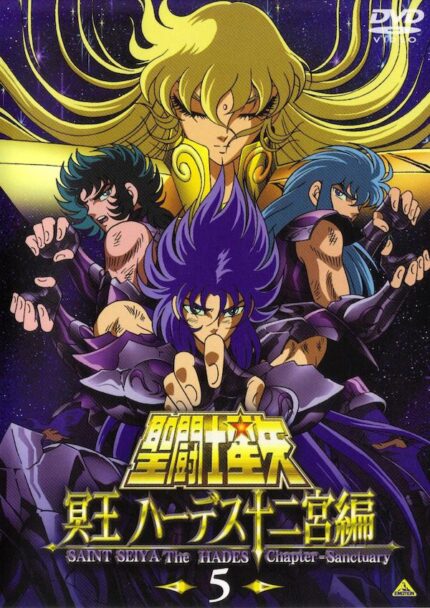
Saint Seiya Hades Chapter Volume 5 DVD Cover shows the battle in the Twin Sala Garden
4. Between Light and Darkness
Saga exhibits a distinctive duality, manifesting as "White Saga" and "Black Saga". Typically, "Saga" refers to his "White" state - prior to his hair turning black. In the Pope's Arc of Saint Seiya, during combat, Saga transitions from his "White" to "Black" persona, raising questions about differences in their combat abilities. Given their shared physical foundation, it's reasonable to assume their inherent strengths are equivalent; however, their combat effectiveness may vary.
In his "Black" state, Saga's combat prowess is notably enhanced, as demonstrated in several encounters:
- Against Shion (elder Pope): Defeated with a single punch.
- Against Aiolos: Repelled with one move.
- Against Aiolia: Knocked down in one move; the second exchange was evenly matched.
- Against Ikki: Initially evenly matched, but subsequently overwhelmed Ikki.
- Against Seiya: Initially defeated Seiya; however, after Seiya's Cosmo surged, he managed to knock down Black Saga. (Given Seiya's fluctuating combat power, this particular battle holds limited reference value.)
Notably, both Aiolia and Ikki have also faced Shaka, providing insightful comparisons:
- Aiolia vs. Shaka: The battle was evenly matched, evolving into an endurance contest without a clear victor, indicating parity in their combat strengths.
A critical observation arises: during his confrontation with Aiolia, Black Saga was not wearing his Gold Cloth. Previously, we've established that a Gold Cloth approximately doubles a Gold Saint's strength (equating to a 10-point increase in strength value). Despite this, Black Saga held his ground against Aiolia, who was clad in his Gold Cloth. This suggests that Black Saga's combat power, even without the Gold Cloth, was comparable to Aiolia's.
Consequently, if Black Saga were to don his Gold Cloth, his absolute combat power could potentially be double that of Aiolia's, or Shaka's (indicating a strength value exceeding 10 points). Even if not precisely double, it's plausible to conclude that, under equal conditions, Black Saga's combat power surpasses Shaka's.
- Ikki vs. Shaka: Throughout their battle, Ikki was consistently overpowered by Shaka, yet Shaka couldn't entirely neutralize Ikki's fighting capability. Ultimately, Shaka unveiled his ultimate technique, Tenbu Hōrin, stripping Ikki of his six senses. Paradoxically, Ikki elevated his Cosmo beyond Shaka's, employing self-destruction to break Tenbu Hōrin. Conversely, in his clash with Black Saga, despite his valiant efforts, Ikki was decisively defeated.
These two battles provide substantial support for the assertion that Black Saga's combat power exceeds Shaka's. In light of the earlier analysis of the Battle in the Garden of the Twin Sala Trees, it becomes prudent to differentiate between Black Saga and White Saga in discussions.
In conclusion, Black Saga's combat power surpasses that of White Saga.
-
 Saint Seiya Cloth Myth EX Gemini Saga GOLD24 Figure - Limited Edition
$499.00Original price was: $499.00.$449.00Current price is: $449.00.

Explaining These Issues Through Fighting Willpower
Compared to "White Saga," "Black Saga" is characterized by being unrestrained, ambitious, unscrupulous in achieving goals, and always in a state of high fighting spirit and murderous intent. In contrast, "White Saga" often harbors hesitation and does not exert full strength. It is evident that "Black Saga's" fighting willpower is significantly stronger than that of "White Saga."
Assuming "Black Saga's" absolute fighting willpower is 1.5 times the default value (fighting willpower value of approximately 6), his combat power would be:
99 + 6 = 105
When Shaka fought Aiolia, Aiolia's fighting willpower was on the rise. (If Aiolia's absolute fighting willpower was 1 when questioning "Black Saga," it immediately increased after being hit by "Black Saga's" light-speed punch. At this time, Shaka, who came out to stop him, bore the brunt.) This gave him a +3 boost in fighting willpower value (absolute fighting willpower of about 1.2), while Shaka's fighting willpower was insufficient (he did not open his eyes or use his ultimate move "Tenbu Hōrin"), resulting in a -2 penalty to Shaka's fighting willpower (absolute fighting willpower of about 0.87).
Aiolia's strength is approximately 100 - (3 + 2) = 95. When not wearing the Gold Cloth, "Black Saga's" combat power is also 95, equivalent to Aiolia's combat power when his fighting willpower is not elevated. (Here, it can be seen that if "White Saga's" strength is set too low, the contradictions arising from the battles in the Pope's Chamber and the Twin Sala Garden would be more challenging to reconcile.)
When fighting Ikki, Shaka's fighting willpower was even lower. Not only did he not exert full strength, but he also had a sense of underestimation.
At the beginning, his fighting willpower suffered a -4 penalty, making his combat power only 100 - 4 = 96. Therefore, he couldn't resolve Ikki (assuming Ikki's strength is around 94, with a fighting willpower of 0 at the start of the battle).
When using "Tenbu Hōrin," Shaka's fighting willpower returned to normal, with a combat power of 100. (In fact, Shaka's fighting willpower increased by about +2 when using "Tenbu Hōrin," but he still underestimated his opponent at this time, so his fighting willpower was reduced. It is assumed that his fighting willpower was at the default value at this time.) This clearly surpassed Ikki's 94 (absolute combat power about 1.5 times that of Ikki), thus fully suppressing Ikki.
However, after losing six senses, Ikki's fighting willpower exploded, with a +6 boost, making his combat power 94 + 6 = 100, equivalent to Shaka's, thus breaking "Tenbu Hōrin."
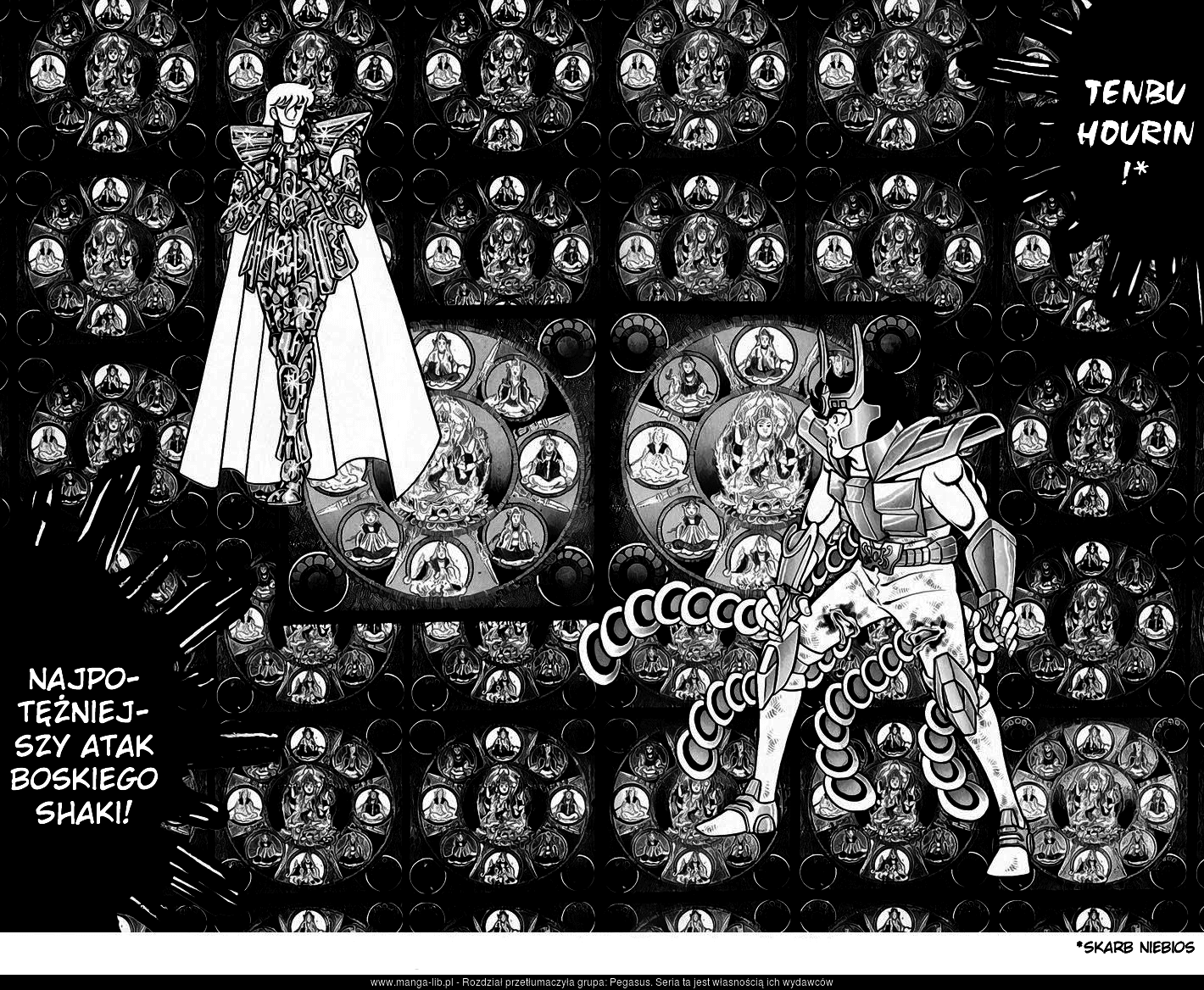
Shaka vs Ikki at Virgo Temple. Source: mangadex.org
How did Ikki's strength compare when fighting "Black Saga" to when he fought Shaka? Generally, in the same chapter, the strength of Bronze Saints always increases. Moreover, Ikki is known for "becoming stronger each time he falls and rises again." Therefore, it is believed that Ikki's strength slightly improved (+1, from 94 to 95, with fighting willpower still at 0).
However, "Black Saga's" combat power still far exceeded Ikki's (with "Black Saga's" combat power at 105, two Ikkis combined would only total 105). Although Ikki fought hard to knock him down ("Black Saga" initially underestimated his opponent, with a -2 fighting willpower, making his combat power 103), it did not cause significant harm. Once "Galaxian Explosion" was unleashed, Ikki was utterly defeated.
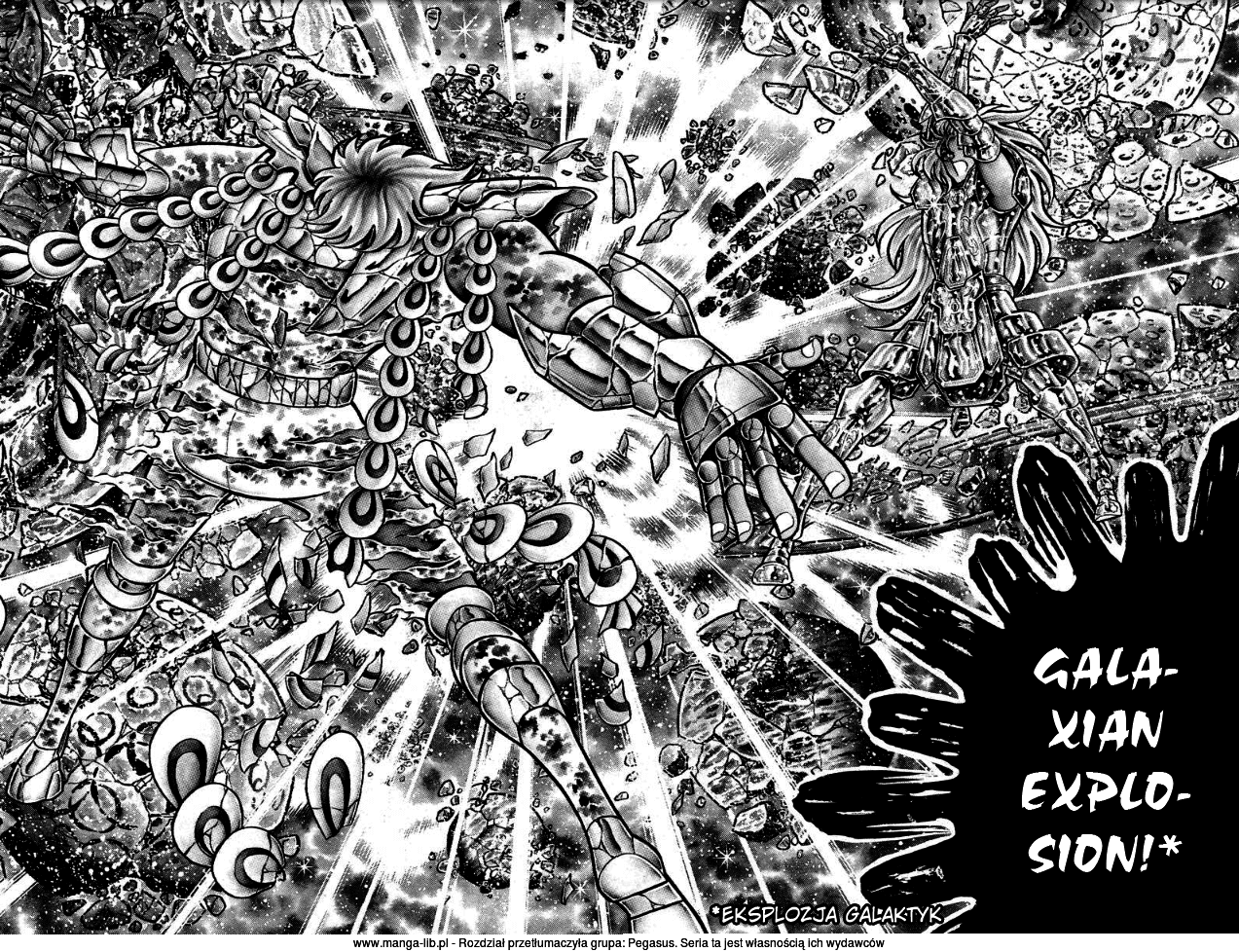
Saga Casting "Galaxian Explosion" to Ikki. Source: mangadex.org
From Ikki, we can also roughly estimate the strength of Saga's younger brother, Kanon.
In Ikki's battle with Kanon, Kanon first knocked Ikki down and sent him away using Another Dimension. After returning from Another Dimension, Ikki withstood Kanon's Galaxian Explosion and even controlled Kanon's nerves with the Phoenix Illusion Demon Fist. After regaining consciousness, Kanon again knocked Ikki down but did not completely neutralize his combat effectiveness.
This battle can be considered a draw, with both sides having comparable combat power. Ikki's strength increased after his revival (from 95 to 96), so Kanon's strength is also around 96 (with both having similar fighting spirit).
However, it's worth noting that during the battle with Ikki, Kanon was wearing the Scale rather than the Gold Cloth. Similar to the Surplice, the Scale's enhancement to a Saint's strength seems inferior to that of the Gold Cloth. If we consider that the Scale provides an 8-point enhancement to a Saint's strength (approximately a 0.74 times increase in absolute strength, compared to the Gold Cloth's 10-point increase, which is about a 1 times increase), then Kanon's strength when wearing the Gold Cloth should be 98.
Now, let's summarize the above discussion:
- According to Clausewitz's formula (2): Combat Power = Strength + Fighting Spirit, where the default value of Fighting Spirit is 0.
- Shaka's strength is 100 (including a 10-point enhancement from the Gold Cloth).
- Saga's (normal state) strength is approximately 99 (including a 10-point enhancement from the Gold Cloth).
- Dark Saga is always in a state of high fighting spirit, with combat power around 99 + 6 = 105.
- Kanon's strength is approximately 98 (including a 10-point enhancement from the Gold Cloth).
- Aiolia's strength is around 95 (including a 10-point enhancement from the Gold Cloth). He often experiences an increase in fighting spirit (though not as pronounced as Saga's transformation into Dark Saga), adding about 3 points to his combat power.
- Ikki's strength increased from 94 to 96 between the Pope's Chapter and the Poseidon Chapter (compared to Seiya and others, whose mental states fluctuate greatly, this increase is relatively small).
- Due to factors like underestimating the opponent and not fighting with full strength, fighting spirit can be penalized by approximately -2 points.
- The Scales of the Mariners and the Surplices of the Specters provide about an 8-point enhancement to a Saint's strength, which is slightly inferior to the 10-point enhancement provided by the Gold Cloth.
In the analysis of the battle between Libra Dohko and Aries Shion at the entrance of the Aries Temple, some might argue that this serves as evidence that the Golden Surplices and Golden Cloths are comparable. However, during this battle, both combatants exhibited notably low fighting spirit, as evidenced by:
- Shion refraining from engaging Dohko until the flames in the Cancer Temple had dissipated.
- Shion hesitating to lethally strike Dohko and Shiryu before Dohko donned his Golden Cloth.
- After Athena's self-sacrifice, Shion appeared at Athena's statue, indicating that both he and Dohko had already abandoned their fight.
-
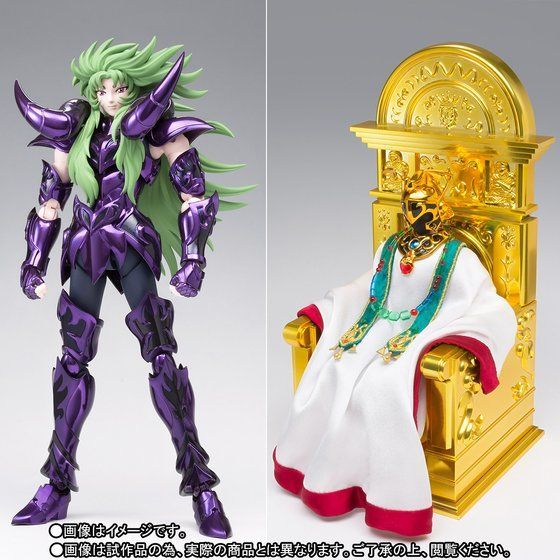
 Saint Seiya Saint Cloth Myth EX Aries Shion Surplice Figure / Pope Set
$159.00 – $219.00Price range: $159.00 through $219.00
Saint Seiya Saint Cloth Myth EX Aries Shion Surplice Figure / Pope Set
$159.00 – $219.00Price range: $159.00 through $219.00
These points suggest that the battle between Dohko and Shion was more of a façade, lacking genuine intent to harm. Therefore, this encounter provides weak support for the notion that Golden Surplices and Golden Cloths are equivalent.
5. Other Gold Saints
What about the strengths of the other Gold Saints?
Let's first consider the Gold Saints who fell during the Twelve Temples arc: Deathmask, Shura, Camus, and Aphrodite.
These Gold Saints were defeated by Bronze Saints whose combat power fluctuated significantly, making them unreliable references for comparison. However, in the absence of better reference points, we can attempt an analysis based on available information.
Assuming that the four Bronze Saints possess comparable strength, we can analyze the encounters between Gold Saints and these Bronze Saints to gauge their relative power levels.
Shura, Camus, and Aphrodite
Each of these Gold Saints experienced mutual defeats with Bronze Saints, primarily due to the explosive Cosmo (i.e., a sudden surge in fighting spirit) exhibited by the Bronze Saints. However, the nature of each battle varied:
- Shura vs. Shiryu: Shura's fighting spirit was moderate, while Shiryu's surged dramatically.
- Camus vs. Hyoga: Camus displayed a lower fighting spirit, showing restraint and offering guidance to his disciple.
- Aphrodite vs. Shun: Contrarily, Aphrodite's fighting spirit surpassed that of Shun, who is known for his consistently low fighting spirit.
From these observations, it appears that Camus's strength might surpass Shura's, with Shura being stronger than Aphrodite. However, it's important to note that these battles provide only weak support for such a hierarchy.
Additional Evidence from the Hades Arc
In the Hades arc, both Camus and Shura engaged in further combat:
- Shura's Excalibur was dodged by Mu, whereas Camus's Diamond Dust successfully struck Mu.
- Shaka evaded Shura's Excalibur and nearly counterattacked immediately but was injured by Camus's freezing air.
Moreover, considering that Excalibur has no successful precedent against Gold Cloths (although in the TV version, Shura did defeat Aiolos, this is only briefly mentioned in the manga), while absolute zero can achieve this (even though Camus himself may not reach this level), it suggests that Camus's strength likely surpasses Shura's.
Now, focusing on Deathmask: During the Twelve Temples arc, he faced Shiryu twice. In their second encounter, Deathmask initially overpowered Shiryu, whose attacks were ineffective against him. However, this advantage was evidently due to his reliance on the Gold Cloth. Once Deathmask was stripped of his Gold Cloth, he was swiftly defeated by Shiryu, who was exhibiting only moderately heightened combat intent at the time. This indicates that Deathmask's base strength is inferior to both Camus and Shura.
Comparing Deathmask to Aphrodite: In the Twelve Temples arc, Aphrodite damaged Shun's Cloth and inflicted severe injuries, whereas Deathmask's Sekishiki attacks neither visibly harmed Shiryu's Cloth nor his body and even restored Shiryu's eyesight. This suggests that Deathmask's strength is likely below Aphrodite's, though this is supported by relatively weak evidence.
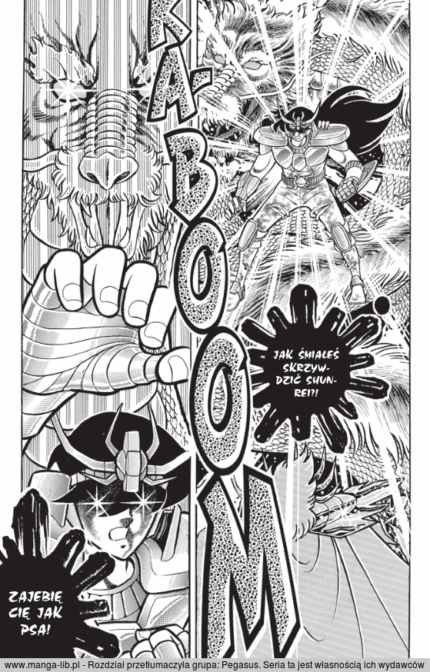
Shiryu's eyesight restored by Deathmask's Sekishiki. Source: mangadex.org
Both Camus and Shura also fought against Shaka. After being struck by Shaka's Tenbu Horin, they nearly lost all combat capability in a short time, whereas Saga, who endured the same attack, maintained considerable strength. Assuming Tenbu Horin reduces absolute strength equally among its targets, Saga's base strength is evidently higher than that of Camus and Shura. After departing the Twin Sala Garden, Saga successfully neutralized Aiolia's Lightning Bolt. At that moment, his combat strength was possibly slightly weaker than Aiolia's but not significantly different.
Disregarding differences in combat intent, Saga's strength while wearing the Surplice would be 99 - 2 = 97. After being struck by Tenbu Horin, his strength decreased by 5 points (approximately 70% of his original strength), resulting in 92 points. Aiolia's strength is 95 points. With this difference, Saga intercepting Aiolia's Lightning Bolt is plausible.
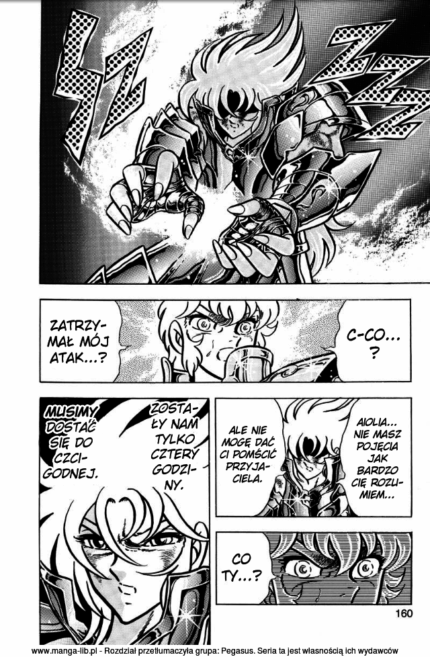
Saga neutralized Aiolia's Lightning Bolt after struck by Shaka's Tenbu Horin. Source: mangadex.org
After being hit by Shaka's Tenbu Horin, Camus and Shura's absolute strengths likely fell to less than half of their original levels (evidenced by their loss of combat ability). This implies that their original absolute strengths were about half of Saga's (considering the earlier assumption that all three suffered equivalent reductions in absolute strength from Tenbu Horin).
Camus's strength (including the Gold Cloth) is approximately between 88 and 94; taking the average gives about 91. Shura's strength (including the Gold Cloth) is approximately between 84 and 90; taking the average gives 87.
With this information, we can now provide a more satisfactory explanation for the battle at the Twin Sala Garden.
At the onset of the battle in the Twin Sala Garden, Shaka's combat power was 100 (with a fighting spirit of 0). Saga and his companions experienced a decrease in combat power due to insufficient fighting spirit (a penalty of -3) and the disadvantage of wearing Surplices instead of Gold Cloths (a penalty of -2). Consequently, their combat powers were:
- Saga: 99 - 2 - 3 = 94
- Camus: 91 - 2 - 3 = 86
- Shura: 87 - 2 - 3 = 82
Collectively, their combined combat power was approximately 104, surpassing Shaka's 100. Therefore, in the initial phase, the trio held the upper hand. However, when Shaka resolved to fight to the death and unleashed his ultimate technique, Tenbu Hōrin, his fighting spirit surged (i.e., his mental Cosmo intensified), increasing by 6 points (absolute fighting spirit rising from 1 to 1.5).
This elevated his combat power to 100 + 6 = 106, allowing him to overpower Saga and his companions. It wasn't until the trio executed Athena Exclamation (A.E.) - a coordinated technique that significantly amplifies fighting spirit - that they managed to break Tenbu Hōrin.
After emerging from the Twin Sala Garden, the combat powers were as follows:
- Saga: His strength decreased to 99 - 2 - 5 = 92.
- Camus and Shura: Their strengths fell below 80.
Aiolia, affected by Shaka's death, experienced an increase in fighting spirit (+3) but also suffered a penalty of -2 due to underestimating his opponents (considering the dire state of Saga and his companions), resulting in a combat power of 96. After killing Shaka, Saga was also determined to fight to the death, increasing his fighting spirit by +3, bringing his combat power to 95. After being struck by Aiolia, his combat power decreased by 1 point to 94, yet he was still able to intercept Aiolia's Lightning Bolt.
Assessing Milo's Strength
In the Sanctuary arc, Milo engaged in combat with Hyoga and emerged victorious. However, several factors should be considered:
- Hyoga's Cosmo: At that time, Hyoga's Cosmo had not fully awakened.
- Milo's Fighting Spirit: While Milo's fighting spirit was relatively low during the battle, it wasn't as subdued as Camus's when he fought Hyoga.
- Narrow Victory: Milo's win was marginal, indicating closely matched abilities.
Therefore, this encounter doesn't conclusively demonstrate that Milo's strength surpasses Camus's, though it suggests their abilities are relatively comparable.
Milo also confronted Kanon, who offered no resistance (with an absolute fighting spirit possibly near zero), making it difficult to gauge Milo's strength from this interaction.
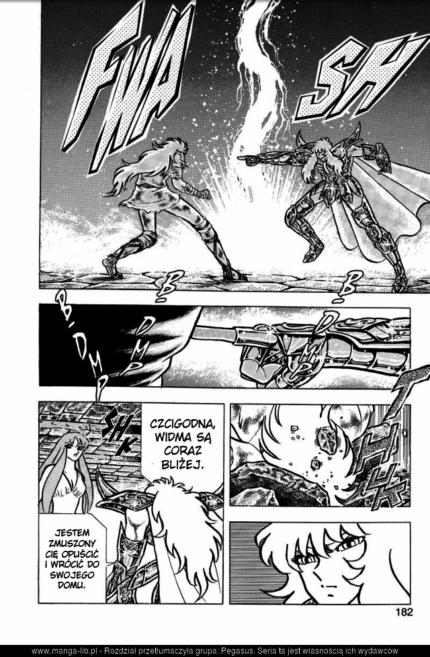
Milo confronted Kanon, who offered no resistance. Source: mangadex.org
After Saga, Camus, and Shura emerged from the Twin Sala Garden, Milo arrived and attacked them. Camus and Shura were nearly defenseless, while Saga's counterattack almost resulted in Milo's death from Saga's Galaxian Explosion. At that time, Saga's combat power was:
- Base Strength: 99
- Surplice Penalty: -2
- Damage from Shaka's Attack: -5
- Increased Fighting Spirit: +3
- Damage from Aiolia and Milo's Attacks: -2
This totals to a combat power of 93. Given this, Milo's strength was somewhat lower. Disregarding the influence of fighting spirit, Milo's strength is estimated to be between 84 and 90, with an average of 87.
Assessing Mu's strength presents challenges. He defeated the combined forces of Aphrodite and Deathmask, indicating his superiority over their combined might. However, determining the exact strength of Aphrodite and Deathmask is difficult, making it challenging to use this as a benchmark for Mu's power.
Introducing a reference point: Rhadamanthys.
-
Saint Seiya Myth Cloth Ex - Wyvern Rhadamanthys Original Color Edition (OCE)
$234.99Original price was: $234.99.$199.99Current price is: $199.99.
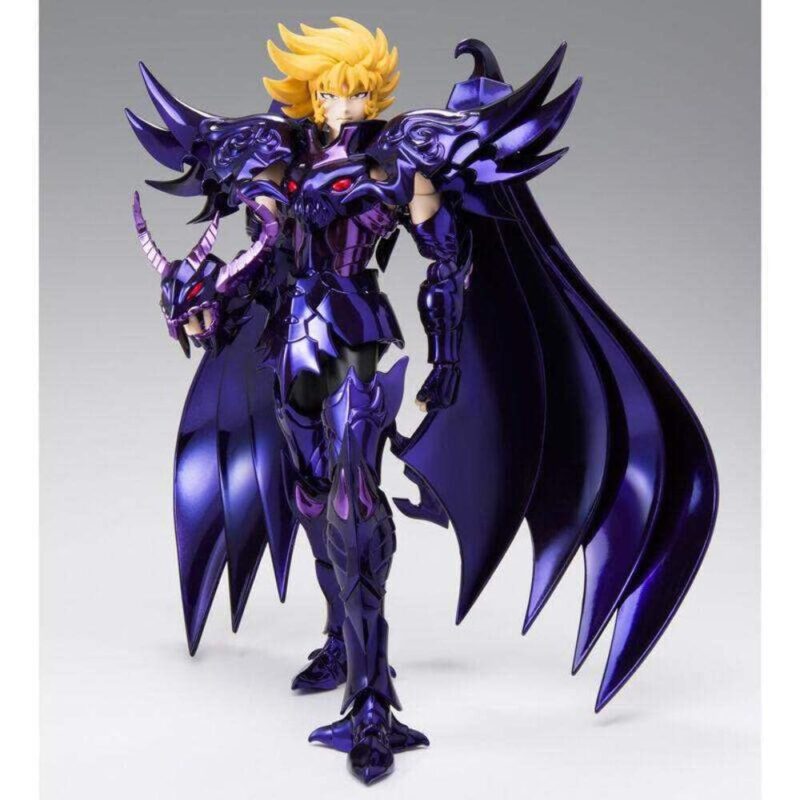
In the terrestrial Hades' castle, Rhadamanthys also defeated Aphrodite and Deathmask. Within this castle, Hades had established a barrier that limited the abilities of Gold Saints like Mu to less than one-tenth of their original power (a reduction of over 33 points).
It's unclear whether this barrier affected deceased Gold Saints.
However, based on the subsequent actions of Saga and others in the terrestrial Hades' castle - such as Shura attempting to seize Pandora and Camus successfully deploying his freezing techniques - it seems they were unaffected. Therefore, Aphrodite and Deathmask likely retained their original strength (though they might have been slightly weakened after Mu's attack). Despite this, Rhadamanthys defeated them without much difficulty and crushed them during their escape, indicating his strength surpasses their combined efforts.
Rhadamanthys and Kanon
In their first encounter, Rhadamanthys managed to knock Kanon down but was subsequently immobilized temporarily by Kanon's mental manipulation.
In their second battle, Kanon withstood Rhadamanthys's Greatest Caution attack and countered by knocking him down with a single punch. It's worth noting that Rhadamanthys had not yet recovered from injuries inflicted by Orpheus of Lyra.
During their third confrontation, Kanon removed his Gold Cloth (resulting in a 10-point decrease in strength, from 98 to 88) and was injured by Rhadamanthys's initial strike. Subsequently, Kanon's fighting spirit surged, leading to both perishing together.
Additionally, Kanon mentioned that before their final battle, they had numerous skirmishes, suggesting that while Rhadamanthys's strength is slightly inferior to Kanon's, the gap isn't substantial.
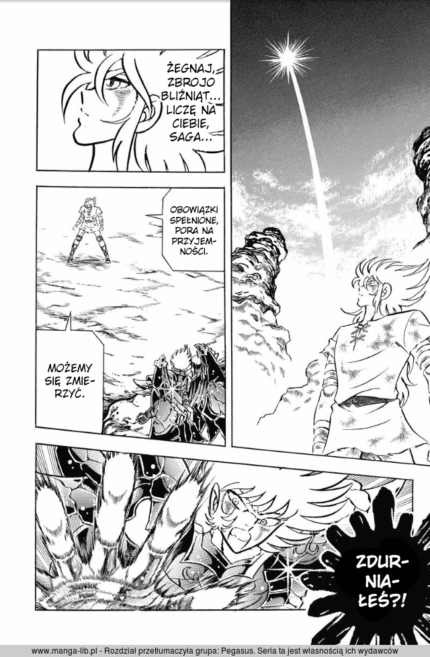
Kanon removed Gold Cloth during the final battle with Rhadamanthys. Source: mangadex.org
Assigning Rhadamanthys a strength level of 95.
Another notable Specter is Papillon Myu. He once immobilized Mu and even gained the upper hand during their battle. Although he was eventually caught in Mu's Crystal Net and defeated, his strength is quite close to Mu's. If we consider Papillon's strength to be comparable to that of Rhadamanthys (perhaps slightly lower), then Mu's strength would be similar to Rhadamanthys'.
Additionally, Mu once intercepted Aiolia's punch and even threatened to take his life (though these are weak pieces of evidence), suggesting Mu's strength might be slightly higher than Aiolia's. Therefore, Mu's strength can be estimated at 96 (with a possible range between 94 and 98).
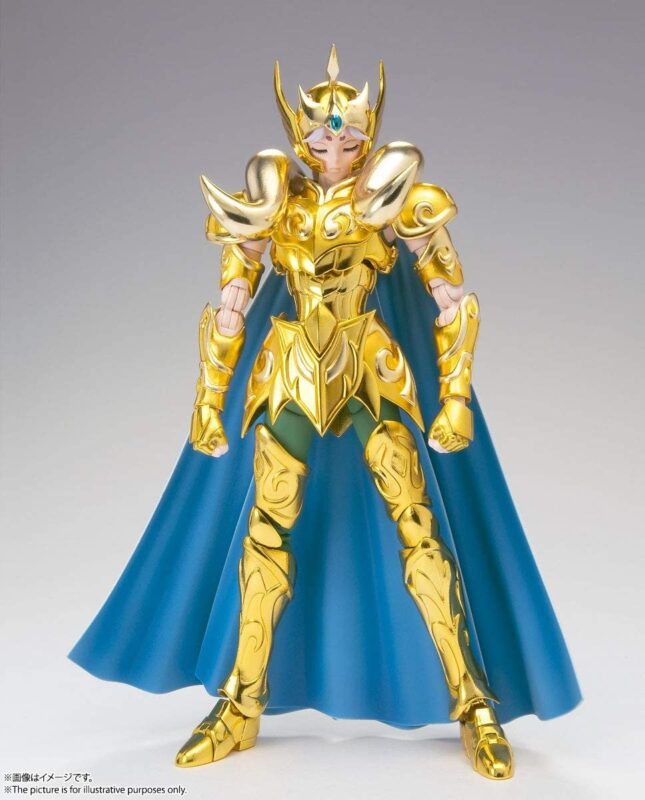
Now, we can also roughly determine the strengths of Aphrodite and Deathmask. Combined, their strength totals around 90, so individually, they are approximately at 80. Considering the difference between the Surplice and the Gold Cloth, their strengths when wearing the Gold Cloth can be set as:
- Aphrodite: 84
- Deathmask: 80
So far, the strengths of the following Gold Saints have yet to be determined: Aldebaran, Aiolos, Dohko, and Shion.
Evaluating Aldebaran's Strength
Aldebaran once fought against Seiya and the other three Bronze Saints in the Taurus Temple, knocking out three of them with a single move (only Shaka and Ikki have achieved this). However, basing his strength solely on this is insufficient, as the Bronze Saints experienced significant growth during the Twelve Temples arc (as Mu mentioned, they gradually awakened their Seventh Sense).
During the battle with Taurus, Shiryu, Hyoga, and Shun hadn't yet shown significant growth in their cosmos (Shiryu's growth became evident after the Cancer Temple, Hyoga's after the Scorpio Temple, Shun's at the Pisces Temple, and Seiya's growth became apparent after battles at the Taurus Temple, Leo Temple, and the Pope's Chamber).
Subsequently, Aldebaran had one of his Great Horns broken by Seiya and conceded defeat. However, in this battle, Aldebaran's fighting spirit was notably low, as evidenced by:
- He consistently underestimated his opponents.
- He didn't actively attack with full force.
- He set a condition for Seiya's victory and conceded once it was met.
- In a later conversation with Mu, Aldebaran mentioned his internal conflicts.
Therefore, using this battle to assess Aldebaran's strength yields a broad range (e.g., 86–96), making it challenging to determine a precise value.
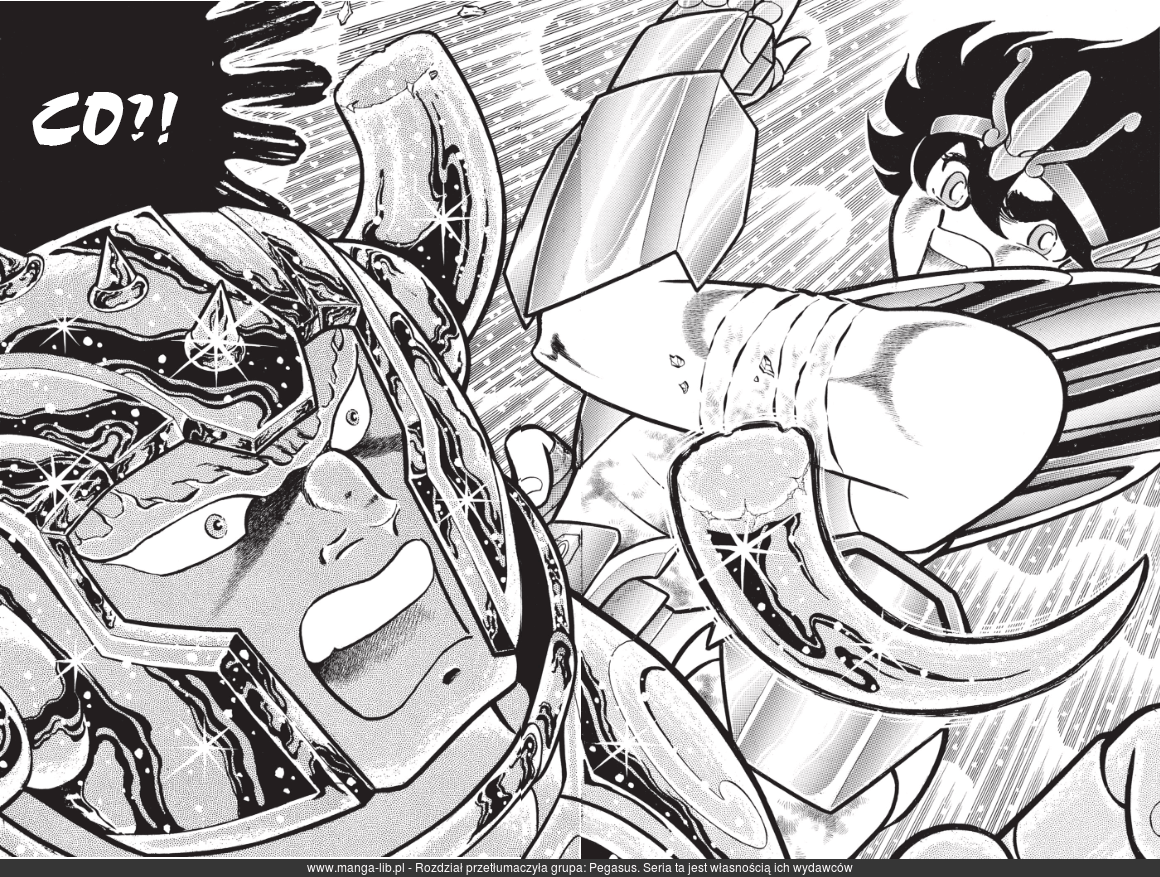
Source: mangadex.org
Later, Aldebaran engaged in two more battles: one resulting in defeat (against the Sea Sorcerer Sorento) and another that could be considered a draw (against the Specter Niobe). However, both opponents had unique abilities.
Sorento used his flute in combat, and by the time Aldebaran heard it, he was already affected. Niobe used scents in battle with similar effects. Notably, when Sorento played his flute, Kanon covered his ears, and when Niobe released his scent, Mu covered his nose and mouth, indicating these techniques had considerable (non-physical) lethality.
In "Saint Seiya," most techniques primarily inflict physical damage. Other attributes like ice (Camus and Hyoga), sound (Sorento), poison (Aphrodite), scent (Niobe), mental (Saga, Kanon, Ikki, Shaka), psychokinesis (Mu, Shion, Papillon), and sleep (Hypnos) often have one-hit decisive effects, especially when the opponent is unprepared (lacking fighting spirit).
Therefore, except for a few quantifiable attributes, these are considered special skills rather than factors in overall strength. Aldebaran encountered opponents with such special skills twice in succession, preventing him from fully showcasing his strength and making it difficult to assess his opponents' strengths. It might be reasonable to estimate his strength around 90.

Evaluating Aiolos' Strength
Aiolos has limited combat records. He once faced Dark Saga; lacking fighting spirit, he fled immediately after Dark Saga launched a light-speed punch. His soul also confronted Aiolia, defeating him when Aiolia's fighting spirit was low. Both battles are insufficient to assess his strength.
However, considering that Saga considered himself superior to Aiolos in all aspects, and Shion also regarded Saga as equal to Aiolos, along with Aiolia admitting inferiority to his brother, Aiolos' strength likely ranges between 95 and 99, averaging around 97. This estimation benefits from comparisons to Saga and Aiolia, whose strengths are relatively well-defined.
Assessing Shion and Dohko's Strengths
Discussions about Shion and Dohko's strengths typically refer to their younger selves. They once fought evenly in front of the Aries Temple, though this battle is considered somewhat staged and may not accurately reflect their true abilities. Their dialogue indicates past duels where they were evenly matched, suggesting similar strength levels. Beyond this, Dohko hasn't engaged in other battles in "Saint Seiya," while Shion has three notable encounters:
- Shion (as the elderly Pope) vs. Dark Saga: Shion was killed instantly by Dark Saga. This event doesn't reflect Shion's true strength due to his old age and lack of fighting spirit.
- Shion vs. Mu: Shion destroyed Mu's Crystal Wall and immobilized him. The first point indicates Shion's strength surpasses Aphrodite and Deathmask. However, the second point doesn't necessarily mean Shion is stronger than Mu, as Mu's fighting spirit was extremely low during this encounter.
- Shion defeating four Bronze Saints: Shion incapacitated the four Bronze Saints with a single move. While impressive, the fluctuating power levels of the Bronze Saints make this an unreliable measure of Shion's strength.
Considering these points, Shion's strength could be estimated between 96 and 102, with Dohko's strength being comparable.
6. Two Power Ranking Lists of Gold Saints
Now, we can finally rank the strengths of all the Gold Saints. Assuming that the Gold Cloths uniformly enhance each Gold Saint's power, the rankings are as follows:
- Shaka: 100
- Saga: 99
- Kanōn: 98
- Aiolos: 97 (range: 95–99)
- Mu: 96 (range: 94–98)
- Aiolia: 95
- Camus: 91 (range: 88–94)
- Aldebaran: 91? (range: 86–96)
- Shura: 87 (range: 84–90)
- Milo: 87 (range: 84–90)
- Aphrodite: 84
- Deathmask: 80
In this ranking, the strongest, Shaka, is four times as powerful as the weakest, Deathmask. To avoid confusion due to difficulties in evaluating certain characters, Shion and Dohko are not included in this list.
When considering combat willpower, it's necessary to distinguish between Dark Saga and regular Saga. Additionally, Aiolia often experiences increased willpower. The rankings, accounting for willpower, are:
- Dark Saga: 105 (99 + 6)
- Shaka: 100
- (Regular) Saga: 99
- Kanōn: 98
- Aiolia: 98 (95 + 3)
- Aiolos: 97 (range: 95–99)
- Mu: 96 (range: 94–98)
- Camus: 91 (range: 88–94)
- Aldebaran: 91? (range: 86–96)
- Shura: 87 (range: 84–90)
- Milo: 87 (range: 84–90)
- Aphrodite: 84
- Deathmask: 80
Regarding combat willpower, there are various states: increase (approximately +3), high increase (approximately +6), surge (over +10, seemingly exclusive to Bronze Saints, though Gold Saints' Athena Exclamation could be considered similar), decrease (approximately -2), low (approximately -4), and very low (below -6). Saints often have very low or nearly nonexistent willpower when ambushed.
The highest individual combat power observed was 106, achieved by Shaka during the famous battle at the Virgo Temple's Twin Sala Garden.
7. The Twelve Gold Saints
After reviewing the intricate rankings and statistics, let's take a moment to discuss the unique characteristics of the Gold Saints' abilities.
7.1 Virgo Shaka
Ranked first in strength, Shaka has long been known as the "Gold Saint closest to God." His ultimate technique, Tenbu Hōrin ("Wheel of Heavenly Law"), is renowned as an all-encompassing offensive and defensive formation. According to Ikki, Shaka keeps his eyes closed to accumulate energy; upon opening them, this stored cosmos is unleashed, elevating his power. When his eyes are closed, Shaka's combat power is comparable to an Aiolia with heightened fighting spirit.
However, when he opens his eyes and resolves to fight to the death, his cosmos can suppress three Gold Saints simultaneously. The Tenbu Hōrin technique immobilizes enemies within its formation and strips them of their senses. Notably, before depriving Ikki of his senses, Shaka first damaged Ikki's Cloth.
Similarly, when stripping Saga and the other two Gold Saints of their senses, he damaged their Surplices. This suggests that inferior armor may render one more susceptible to sensory deprivation. In fact, when Ikki lost all five senses, he was nearly immobilized, whereas Saga and his companions retained considerable mobility even after losing four senses. Therefore, the Gold Cloths might offer some defense against Tenbu Hōrin.
While Tenbu Hōrin is a formidable technique, its success rate isn't particularly high. Shaka employed it twice, both times it was broken, and it even endangered Shaka himself, indicating that the move carries certain risks.
Shaka also possesses another technique, Tenma Kōfuku ("Demon Pacifier"), which appears to be a physical attack. He has used it effectively against Ikki, several Bronze Saints, and numerous Specters.
Additionally, Shaka can create illusions, such as blood seas, cycles of reincarnation, and various phantasms. However, these illusions only temporarily confuse enemies and have never decisively defeated opponents, perhaps because his adversaries are typically quite strong.
It's worth noting that Shaka's defensive capabilities are exceptionally strong. Neither Saga's attack, which destroyed half of the Virgo Temple, nor the combined assault of three Gold Saints, inflicted serious injuries on Shaka. Among the twelve Gold Saints, Shaka's defensive barriers are unparalleled. He also possesses considerable long-range attack capabilities, as demonstrated by his strike from the Virgo Temple that destroyed half of the Cancer Temple.
Overall, Shaka gives the impression that as long as his strength (or combat power) surpasses that of his enemy, the opponent stands little chance against him. However, his adaptability may not be particularly strong. Such a character serves as an excellent benchmark for measuring strength.
7.2 Gemini Saga
7.2.1 Saga's Techniques and Abilities
Saga possesses a range of formidable techniques that showcase his exceptional combat prowess:
- Galaxian Explosion: This is Saga's most potent physical attack, capable of generating an explosion with the force to shatter stars. Both his benevolent and malevolent personas have employed this technique effectively.
- Another Dimension: Saga can manipulate space to create alternate dimensions, attempting to banish opponents into these realms. However, this technique has had limited success, as opponents have often found ways to counter or escape from it.
- Genro Mao Ken (Demon Emperor Fist): A mental attack that induces hallucinations and allows Saga to control the opponent's mind. The malevolent Saga used this technique to completely dominate Aiolia's mind and briefly control Ikki. The benevolent Saga has not been depicted using this technique.
In summary, Saga's dual personas exhibit varying levels of combat effectiveness, with his malevolent side demonstrating heightened aggression and combat prowess. His array of techniques, including the formidable Galaxian Explosion and the mind-controlling Genro Mao Ken, solidify his status as one of the most powerful Gold Saints.
7.2.2 Saga's Resilience and Combat Prowess
In addition to his formidable offensive capabilities, Saga is renowned for his remarkable resilience and adaptability in combat:
- Stamina and Endurance: Saga has demonstrated an extraordinary ability to withstand powerful attacks. Instances include:
- Quickly recovering after being struck by Seiya's light-speed punches and Pegasus Rolling Crush.
- Enduring Ikki's Phoenix's Wings Rise, which sent him crashing through multiple pillars, yet remaining largely unfazed.
- Rapidly regaining composure after being affected by Ikki's Phoenix Illusion Demon Fist.
- After withstanding the combined Cosmo of Seiya and his companions, he only briefly lost consciousness, indicating his immense durability.
- Adaptability in Combat: Saga's combat style is characterized by his ability to seize opportunities and adapt to changing battle conditions. His strategic mindset allows him to exploit opponents' weaknesses effectively, making him a formidable adversary.
Overall, Saga's combination of overwhelming offensive power, exceptional resilience, and strategic acumen solidifies his status as one of the most formidable Gold Saints in the "Saint Seiya" universe.
7.3 Gemini Kanon
The third-ranked Gold Saint is Kanon, Saga's younger twin brother and also a Gemini Gold Saint. His techniques closely resemble Saga's, including Galaxian Explosion, Another Dimension, and Demon Emperor Fist.
During the Poseidon arc, he confronted Ikki, who initially mocked him for being inferior to Saga but later acknowledged that Kanon was on par with his brother.
In the Hades arc, when Milo attacked Kanon, Milo stated that if Kanon fought seriously, their battle would be evenly matched, and Milo might even lose. In this analysis, Milo's strength with the Gold Cloth is rated at 87, while Kanon's strength without the Gold Cloth is 88, indicating a minimal difference between them.
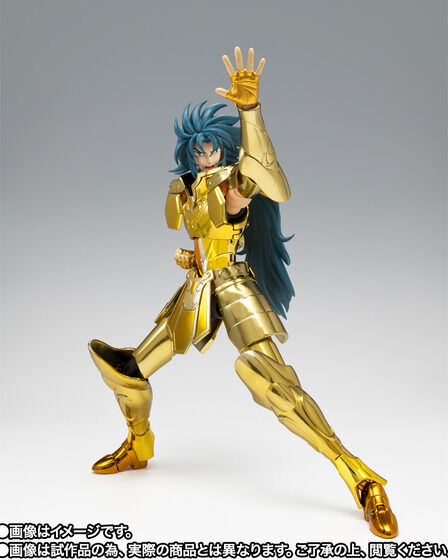
Kanon's strength is further demonstrated in the Hades arc. He infiltrated the Underworld, using his Demon Emperor Fist to create illusions for Balron Lune, then defeated Lune with a single finger strike.
Radamanthys, one of the 3 Judges of the Underworld, had previously defeated Aphrodite, Deathmask, Mu, Aiolia, and Milo. Although Radamanthys initially knocked Kanon down, Kanon quickly immobilized him with a mere finger strike. Subsequently, six Specters fell like chaff before Kanon's Galaxian Explosion. When Radamanthys reappeared, Kanon intercepted his Maximum Precaution attack with one hand and knocked him down with a single punch, though Radamanthys admitted he was injured at the time.
Later, when the 3 Judges surrounded Kanon, he was eventually defeated by Aiacos and Minos. After receiving assistance from Ikki to escape, Kanon continued to be pursued by Radamanthys. He removed his Gold Cloth to return it to his brother Saga and then perished alongside Radamanthys in a final attack. In total, Radamanthys managed to defeat six Gold Saints, earning him the title of "Golden Killer."
Overall, Kanon is an exceptionally powerful Gold Saint, with strength comparable to Saga's, though perhaps slightly inferior. Some believe that during the Hades arc, Kanon upheld the dignity of the Gold Saints, a sentiment that holds considerable truth.
7.4 Sagittarius Aiolos
Ranked fourth among the Gold Saints, Aiolos unfortunately lacks concrete battle records. His esteemed position is primarily inferred through comparisons with Saga and his younger brother, Aiolia. During his attempt to rescue the goddess Athena, Aiolos was struck by Dark Saga's light-speed punch and immediately retreated, indicating a clear disadvantage. However, considering his opponent was Dark Saga, whose combat power reaches 105 when donning the Gold Cloth, this outcome isn't surprising.
Additionally, Aiolos' spirit once defeated Aiolia, and although Aiolia's fighting spirit was low at that time, suggesting Aiolos' strength surpasses Aiolia's isn't contentious. If we consider that Aiolos' Sagittarius Gold Cloth, equipped with the Golden Arrow, offers greater enhancement than other Gold Cloths (for instance, if standard Gold Cloths provide a strength boost of 10, the Sagittarius Cloth might offer 12 or 13), his ranking could be even higher.
7.5 Aries Mu
Mu is ranked fifth with a strength level of 96. He defeated the combined forces of Aphrodite and Deathmask, indicating his superiority over their alliance. Papillon Myu, was also a formidable adversary; Radamanthys once believed Papillon capable of annihilating all Gold Saints (it seems Radamanthys considered Aphrodite and Deathmask as the standard for Gold Saints). Nevertheless, Papillon was defeated in his confrontation with Mu. Mu's psychokinetic abilities and spatial manipulation are formidable.
His technique, Starlight Extinction, possesses both physical destructive power and spatial displacement capabilities. Mu's Crystal Wall can completely block certain non-physical attacks and weaker physical assaults; however, it is somewhat fragile and may shatter under powerful physical strikes. His teleportation allows him to evade enemy attacks; according to Papillon, Mu can traverse great distances in a short time, making it useful for dodging and retreating.
Mu is gentle and rarely angered. Unfortunately, his calm demeanor hasn't benefited him in battles within "Saint Seiya," as being enraged often correlates with heightened fighting spirit, and there are scarcely any instances where anger leads to exploitable flaws by enemies.
A lack of fighting spirit is Mu's greatest shortcoming. When his teacher, former Pope Shion, appeared before him, Mu barely dared to resist; upon discovering that Saga, Camus, and Shura had been resurrected as enemies, his sudden shock led to a noticeable drop in fighting spirit, resulting in him being subdued without resistance.
Another drawback is his low endurance; when subjected to moderately intense physical attacks, he exhibits signs of diminished combat capability, suggesting weak defense and limited vitality. Overall, Mu gives the impression of possessing strength but employing relatively gentle techniques.
-
 Bandai Saint Cloth Myth EX Aries Mu Original Color Edition (OCE) Figure
$375.00 – $475.00Price range: $375.00 through $475.00
Bandai Saint Cloth Myth EX Aries Mu Original Color Edition (OCE) Figure
$375.00 – $475.00Price range: $375.00 through $475.00
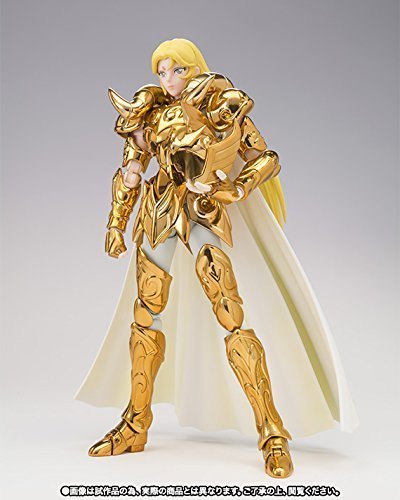
7.6 Leo Aiolia
Aiolia has a strength rating of 95, ranking sixth among the twelve Gold Saints. Despite his placement, his combat ability remains formidable. Upon learning the truth about Athena, Aiolia furiously confronted the false Pope Saga, only to be struck down by Dark Saga's Light-Speed Punch. However, he did not suffer severe damage. When Dark Saga launched a second punch, Aiolia, having regained his fighting spirit, successfully blocked it.
Shortly after, Shaka appeared, and Aiolia engaged him in a prolonged endurance battle, with both sides exchanging attacks without a clear winner. While Shaka was undoubtedly holding back in this fight, Aiolia’s impressive combat capability remained evident.
One of Aiolia’s defining characteristics is his incredibly fast attacks. His Lightning Plasma and Saga’s Light-Speed Punch are among the few techniques in the series that explicitly reach the speed of light. Unlike most other Gold Saints, whose attacks do not explicitly showcase light-speed movement, Aiolos' punches are depicted as such in the anime but not necessarily in the manga. Aiolia's technique has a wide area of effect and substantial destructive power, making it one of the most practical fighting styles.
During the Hades: Twelve Temples Arc, when Specters invaded Leo Temple, Aiolia eliminated five Specters in an instant with a single strike. Only Shaka, Kanon, and Ikki have displayed the ability to take down multiple enemies in one move. Even when ensnared by Worm Raimi, Aiolia quickly broke free and neutralized the threat using Lightning Plasma.
During the battle in Virgo Temple, Aiolia unleashed Lightning Plasma against Saga and his group, only for Saga to catch the attack with his bare hands - despite the fact that he had already suffered damage from Shaka’s Tenbu Hōrin. This suggests that Aiolia still had a slight gap in power compared to top-tier Gold Saints. Furthermore, Aiolia was also defeated by Aiolos’ spirit, after which he promptly conceded defeat.
Compared to Mu, Aiolia has higher endurance. He has been knocked down by Seiya, Saga, Aiolos, and Worm, yet never showed significant signs of declining combat strength.
Overall, Aiolia is a combat-focused warrior who frequently enters battle with increasing fighting spirit (+3), allowing him to fully utilize his strength. However, his primary weakness lies in his limited variety of techniques, relying primarily on Lightning Plasma as his go-to move.
7.7 Aquarius Camus
Camus’ strength is more difficult to assess, with estimates ranging between 88 and 94. Taking an average of 91, he ranks seventh among the twelve Gold Saints.
His most powerful technique, Aurora Execution, was strong enough to defeat Hyoga. Interestingly, Hyoga learned this technique during his battle against Camus and later used it to defeat Camus himself, as well as his former comrade Isaac and one of the Three Judges of the Underworld, Minos (though Minos had already been weakened by the shockwave from the Wailing Wall’s destruction). This suggests that Aurora Execution is a highly powerful technique.
However, unlike Lightning Plasma, which can be executed instantly, Aurora Execution appears to require some time to charge, making it less versatile in fast-paced combat.
Camus' freezing techniques are extremely potent. Besides freezing Hyoga and encasing him in an ice coffin that allegedly requires multiple Gold Saints' power to break, he also knocked down Mu and froze Shaka's legs, showcasing his formidable strength.
However, under the effects of Shaka’s Tenbu Hōrin, Camus, like Shura, lost most of his mobility. This is a clear distinction from Saga, who, despite being affected by the same technique, managed to retain considerable combat ability. This suggests that Camus' overall resilience and adaptability are inferior to Saga's.
